There are pasta sauces, and then there are ragus that stick with you long after the plate is cleaned. This smoked pork shank ragu belongs firmly in the second camp. Built from humble ingredients and a slow, layered process, it’s the kind of dish that warms the soul and earns a permanent spot in your recipe rotation. What makes it unique is starting with smoked pork shanks, then braising them low and slow in a rich tomato and wine base. The result is a sauce that’s smoky, savory, complex, and unlike anything you’ll find in a jar.
Let’s walk through it step by step. Not just the “how,” but the “why” behind each move. Understanding the reasoning makes you a better cook and helps you appreciate the way all these little techniques come together to create something big.
Building Flavor from the Start
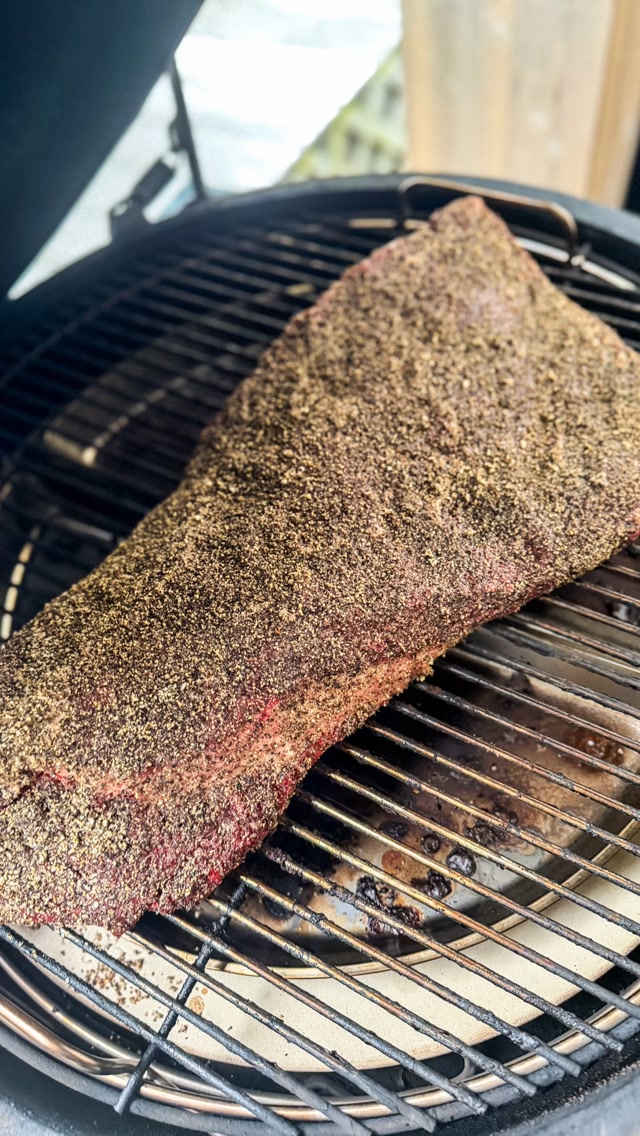
We begin by smoking the pork shanks. This isn’t just for fun or flair. Smoking them before braising develops a deep, wood-fired flavor that carries through every bite of the finished sauce. Pork shanks are loaded with collagen and connective tissue, which makes them ideal for braising, but they’re relatively mild in flavor compared to beef shanks. That kiss of smoke gives them the kind of backbone you need for a sauce that’s meant to simmer for hours. Two to three hours in the smoker at 225–250°F is all it takes to create that rich, smoky depth without cooking them all the way through.

Next comes the foundation of the sauce: the soffritto. Onions, carrots, and celery form the base, and taking the time to caramelize them properly adds sweetness and depth. You’re not just softening vegetables here, you’re building the foundation of flavor for the entire pot. After about 10–12 minutes, when the vegetables have softened and darkened just slightly, in goes the garlic. A quick sauté for one minute is all it needs.

This is when we add our dried Italian herbs, oregano, thyme, and, if you like a little heat, some red pepper flakes. Adding them at this point, before any liquid, allows the herbs to bloom in the hot oil. Heat wakes up dried spices, releasing their natural oils and boosting their flavor. If you toss them into a pot of tomatoes or stock right away, they’ll still season the sauce, but they won’t pop in quite the same way. This step gives the ragu its signature fragrance and a head start on complexity.
The Wine and Tomato Base
Once the herbs are fragrant, we stir in tomato paste. Tomato paste is concentrated tomato flavor, and cooking it until it darkens in the pot deepens that flavor even further. It also helps thicken the sauce later. Then comes the wine. Red wine isn’t just about acidity, it adds another layer of flavor that sits beneath the tomatoes and pork. By simmering it down until reduced by half, you cook off the harsh alcohol while concentrating its fruitiness and depth. Think of it as building a supporting structure: the wine, paste, and vegetables form a strong backbone for the tomatoes and pork to rest on.

At this stage, two cans of crushed tomatoes are stirred in. That’s intentional, we hold back the third can until later. Adding all three up front would make the sauce heavier, but by starting with two, we give the shanks room to shine while they braise.

The Braise
The smoked pork shanks now get nestled into the sauce with a few bay leaves. This is where time does its magic. A long, slow braise in the oven at 300°F for three hours allows the pork shanks to break down. The connective tissue melts into gelatin, enriching the sauce and giving it body. The meat, once tough, becomes tender enough to fall away from the bone. Patience here pays off, this is what transforms basic ingredients into a sauce with soul.

Finishing Strong
After three hours, the shanks are removed and shredded, bones and excess fat discarded. At this point, the rest of the tomatoes and two cups of chicken stock are added along with the shredded pork. This second stage of cooking balances the sauce, lightens it just slightly with broth, and adds back freshness from that last can of tomatoes. Another hour uncovered in the oven at 300°F thickens everything and melds all the flavors into one cohesive, silky sauce.
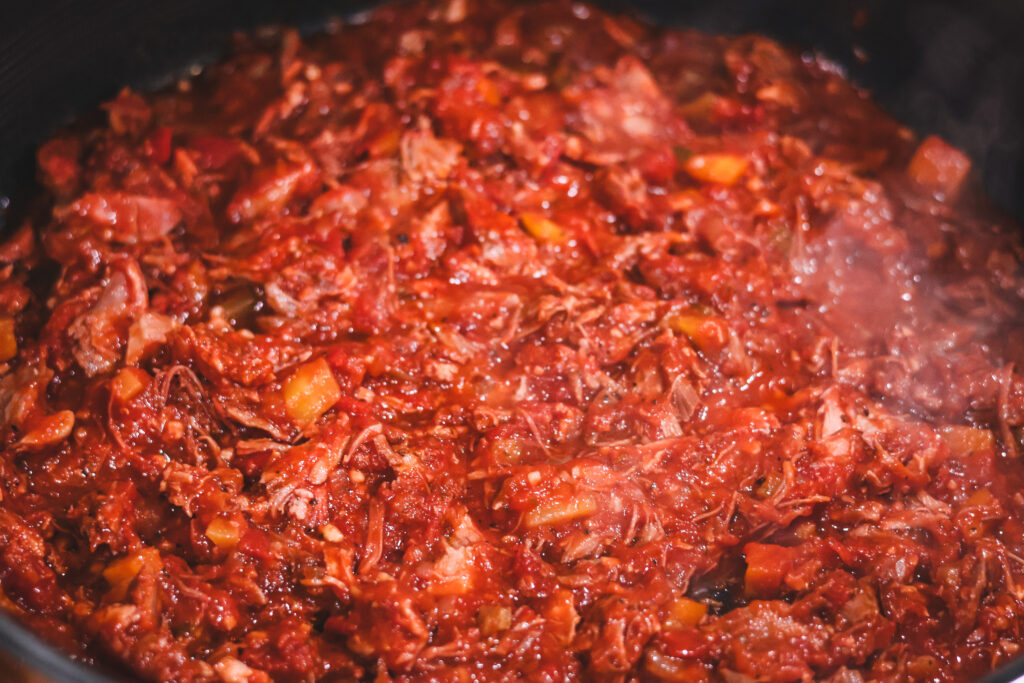
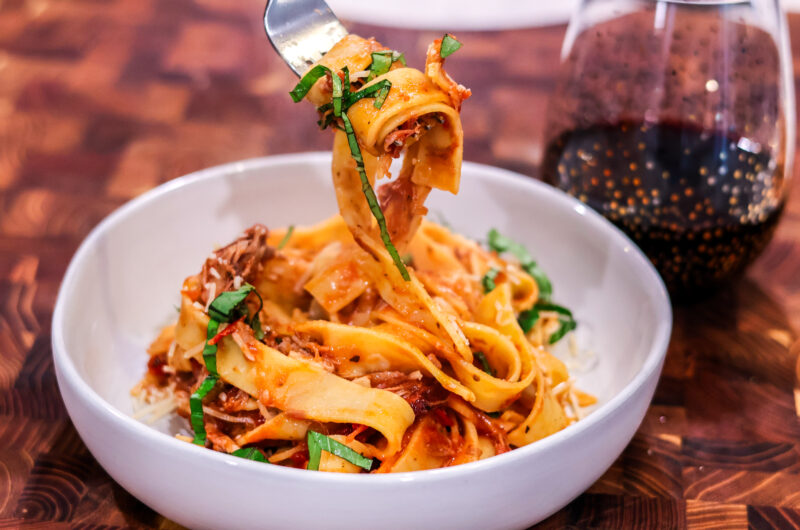
To finish, a grating of Parmesan stirs right into the pot if you’d like some added richness, and fresh basil or parsley at the end gives brightness. Spoon it over wide ribbons of pappardelle, rigatoni, or creamy polenta, and you’ve got a dish that tastes like you cooked it for days.
Storing & Reheating
This recipe makes a big batch, and that’s exactly what you want. After it cools slightly, I portion the ragu into quart-sized mason jars and freeze them for later use. The sauce holds beautifully in the freezer and becomes a lifesaver on busy nights.
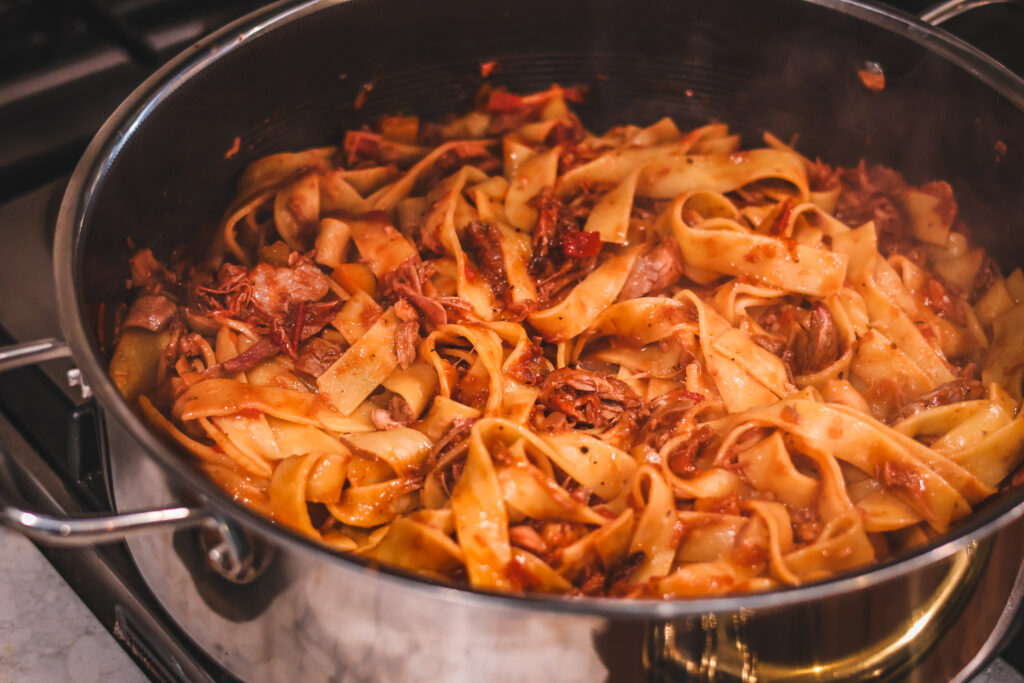
When I’m ready to use it, I’ll boil the pasta of choice, warm the thawed sauce in a skillet, and transfer the pasta directly into the sauce along with a splash of the starchy pasta water. This not only thins the sauce to the perfect consistency but also helps it cling to the noodles. A final dusting of Parmesan and a sprinkle of fresh basil ties it all together. Quick, simple, and every bit as delicious as the day it was first made.
This Ragu Works
Every step here has a purpose. Smoking the meat adds depth. Caramelizing vegetables builds sweetness. Blooming dried herbs intensifies their fragrance. Cooking down tomato paste and wine layers in concentrated flavor. And the long braise transforms a tough cut of pork into tender, melt-in-your-mouth meat that enriches the sauce with its natural collagen. The result is more than a pasta sauce, it’s a master class in how to build flavor step by step.
This smoked pork shank ragu is hearty enough for a weekend dinner, versatile enough for weeknights, and smart enough to stockpile in your freezer. It’s the kind of sauce that proves slow cooking is always worth it.
Give this Smoked Pork Shank Ragu a try and let me know how you use it. Tag @thatgrillerguy on social media and show off your creations!
Smoked Pork Shank Ragu
Course: MainCuisine: Italian12
servings30
minutes6
hoursSmoked pork shank ragu slow-braised in tomatoes, red wine, and herbs for a rich, smoky pasta sauce perfect for dinner or freezer meal prep.
Ingredients
- For the Pork Shanks
7 lbs bone-in pork shanks
2 tablespoons kosher salt
1 tablespoon freshly cracked black pepper
1 teaspoon garlic powder
1 teaspoon onion powder
- For the Sauce Base
3 tablespoons olive oil
2 large yellow onions, finely diced
3 large carrots, finely diced
3 celery stalks, finely diced
6 cloves garlic, minced
6 tablespoons tomato paste
2 cups dry red wine (Chianti, Cabernet, or similar)
3 cans (28 oz each) crushed tomatoes, divided use
2 cups chicken stock
- Herbs and Seasoning
3 bay leaves
2 teaspoons dried oregano
1 teaspoon dried thyme
1 teaspoon crushed red pepper flakes (optional)
Salt & black pepper to taste
Directions
- Pat shanks dry and season with salt, pepper, garlic powder, and onion powder.
- Preheat smoker to 225–250°F.
- Smoke shanks for 2–3 hours, until they take on a deep smoky color. (They do not need to be tender yet.)
- In a large Dutch oven, heat olive oil over medium heat.
- Add onions, carrots, and celery. Cook, stirring, until softened and lightly caramelized, about 10–12 minutes.
- Stir in garlic and cook for 1 minute.
- Add oregano, thyme, and red pepper flakes (if using). Stir until fragrant, about 1 minute.
- Stir in tomato paste and cook until it darkens, 2–3 minutes.
- Deglaze with red wine, scraping the bottom of the pot. Simmer until reduced by half, about 5 minutes.
- Stir in 2 cans of crushed tomatoes.
- Nestle smoked shanks into the sauce and add bay leaves.
- Cover Dutch oven and transfer to a 300°F oven. Braise for 3 hours, until pork is fork-tender and pulling away from the bone.
- Remove pork shanks from the pot. Discard bones, cartilage, and excess fat. Shred the meat.
- Return shredded pork to the pot. Add the remaining can of crushed tomatoes and 2 cups chicken stock. Stir to combine.
- Place pot back in the oven, uncovered, and cook for another 1 hour at 300°F, until sauce thickens and flavors meld.
- Taste and adjust seasoning with salt and black pepper. Stir in Parmesan if using.
- Serve tossed with pappardelle, rigatoni, or spooned over creamy polenta. Garnish with fresh basil or parsley.
- Cool leftovers slightly, then portion into quart-sized mason jars to freeze. When reheating, warm sauce in a skillet, toss with cooked pasta, and use a splash of pasta water to thin and help sauce cling.